
 312-345-1700

Can Refusing Field Sobriety Tests Help Your DUI Defense?
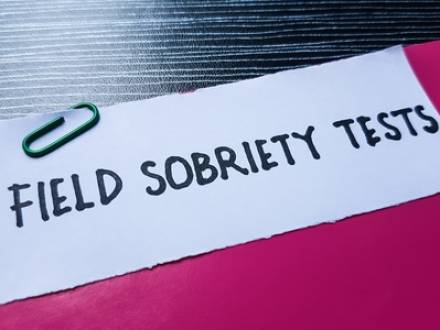 Refusing field sobriety tests in Illinois can sometimes help your DUI defense. These tests are among the main tools officers use to build probable cause for a DUI arrest. The results are often used as evidence against you in court, but the prosecution will sometimes use your refusal against you as well. If you are facing a DUI charge in Illinois in 2026, a Chicago DUI defense lawyer at Hartsfield Law can review every detail of your case and help you build the strongest possible defense.
What Are Field Sobriety Tests and Why Do Officers Use Them?
Field sobriety tests are physical and cognitive exercises that officers use during a traffic stop to evaluate whether a driver may be impaired. The Horizontal Gaze Nystagmus test involves following a moving object with your eyes. The Walk and Turn test requires walking heel to toe along a straight line. The One Leg Stand test requires balancing on one foot while counting.
These three tests are called Standardized Field Sobriety Tests. They were developed by the National Highway Traffic Safety Administration. Officers are trained to look for specific clues of impairment during each test and use the results to justify a DUI arrest.
The problem is that these tests are not as reliable as they are often made to sound. Many factors that have nothing to do with alcohol can affect how someone performs on these tests. These include nervousness, fatigue, a medical condition, uneven pavement, poor lighting, or even the type of shoes you are wearing.
Do You Have to Do Field Sobriety Tests When Asked in Illinois?
You have the legal right to decline FSTs without facing the same automatic consequences that come with refusing a chemical breath or blood test.
This is an important distinction. Illinois has an implied consent law under 625 ILCS 5/11-501.1 that applies to chemical tests. According to this law, refusing a breath or blood test after a lawful arrest triggers an automatic license suspension. But that doesn’t apply to FSTs. Refusing to perform them does not automatically result in a license suspension.
You can politely tell the officer that you are declining to perform the field sobriety tests. You should do so respectfully and without confrontation, but you are within your rights to refuse.
How Can Refusing Field Sobriety Testing Help Your Defense?
If you refuse field sobriety tests, the officer cannot use the results of those tests as evidence against you because there are no results to use. In a DUI case, the prosecution often relies heavily on how a defendant performed on field sobriety tests to establish that they were impaired. Without that evidence, the state's case becomes harder to prove.
Field sobriety test results are also highly subjective. The officer interprets what they see and writes up their observations in a police report. That interpretation can be inaccurate, biased, or based on a misunderstanding of what they observed. Refusing the tests removes this subjective evidence from the equation entirely.
Without field sobriety test results, the prosecution is left relying on the officer's general observations. These can include the smell of alcohol, bloodshot eyes, or slurred speech, and any chemical test results. Each of these remaining pieces of evidence can still be challenged, but the overall case is often weaker without the field sobriety test component.
Are There Any Downsides to Refusing Field Sobriety Tests?
Refusing field sobriety tests is not risk-free, and it is important to understand the potential downsides.
First, refusing the tests does not guarantee you will not be arrested. It simply removes one tool the officer might use to justify the arrest and one piece of evidence the prosecution might use at trial.
Second, a prosecutor may try to argue to a jury that your refusal suggests you knew you would fail the tests, implying consciousness of guilt. While this argument is not always persuasive, it is something your attorney will need to address if it comes up at trial.
Third, refusing field sobriety tests may make the officer more likely to request a chemical breath or blood test. If you then refuse the chemical test as well, the automatic license suspension provisions of Illinois's implied consent law kick in.
Given the possible complexities of these cases, it’s important to have an experienced attorney on your side.
Schedule a Free Consultation With Our Rolling Meadows DUI Defense Attorney
Attorney Kendall D. Hartsfield brings a background that sets him apart from most defense attorneys. He has represented indigent defendants through the Will County Public Defender's Office and served as an educator for the City Colleges of Chicago, teaching courses to pre-trial detainees at the Cook County Department of Corrections. That experience gives him a deep understanding of the criminal justice system from every angle and a genuine commitment to the people he represents.
Contact the Chicago DUI defense lawyer at Hartsfield Law by calling 312-345-1700 for your free consultation today.







Oakbrook Terrace, IL 60181312-345-1700

Contact Our Firm
 The use of the Internet or this form for communication with the firm or any individual member of the firm does not establish an attorney-client relationship. Confidential or time-sensitive information should not be sent through this form.
I have read and understand the Disclaimer and Privacy Policy.